Path 01
A buyer is in a due-diligence window
Observed conditions, immediate needs, and acquisition assumptions need one view.
Likely discussion: Acquisition due diligence with capital planning
Prepare this pathValuation & Appeals
Identify building-system issues, capital exposure, and due diligence risks before acquisition, refinance, or capital planning decisions lock in.
This page addresses physical building condition, systems, capital repairs, and transaction diligence. For a taxing authority’s assessed value or appeal deadline, start with Property Tax Appeals.
Meet Jamie PopeWatch Jamie on this topicFounder-led guidance, ready when you are.15 minutes. No complete file required. The goal is a clear next step.
Start with the decision context
Start with the due-diligence or capital-planning purpose. A condition assessment is separate from a property-tax assessment appeal.

These paths prepare a conversation. They do not provide tax, legal, valuation, or eligibility conclusions.
Path 01
Observed conditions, immediate needs, and acquisition assumptions need one view.
Likely discussion: Acquisition due diligence with capital planning
Prepare this pathPath 02
Repairs, replacements, timing, and operational priorities need an annual roadmap.
Likely discussion: Property Condition Assessment with Reserve Studies
Prepare this pathPath 03
Lender, buyer, and owner expectations must be clear before the site review.
Likely discussion: Condition evidence with transaction support
Prepare this pathIn plain English
A property condition assessment is an engineering inspection of a building's bones, roof, structure, mechanical, electrical, plumbing, pavement. It tells you what is worn out, what is close, and what each fix will cost, before you buy, refinance, or budget. Read before closing, it is negotiating power. Read after closing, it is a repair bill. The inspection costs thousands. The surprise costs more.
Case study
On a Boca Raton office building, one engineering visit did 5 jobs: it documented the building's condition, supported the valuation, fed the depreciation study, armed the property tax appeal, and corrected the insurance numbers. Each finding reinforced the next, because the facts came from the same walk through the same building. One inspection. 5 answers.
Read the Boca Raton engineering case studyDecision fit
JPOPE frames the service around the property decision first, then packages the technical findings for the owner, CPA, advisor, or deal team that needs to act on them. The aim is simple: identify the minimum tax legally owed, preserve every supportable opportunity, and turn the first review into a clear next step before the window closes.
An assessment notice, financing event, due diligence window, or appeal deadline is active.
The property story needs defensible support beyond a simple spreadsheet comparison.
Capital exposure, condition, insurance, and valuation questions are starting to affect tax decisions.
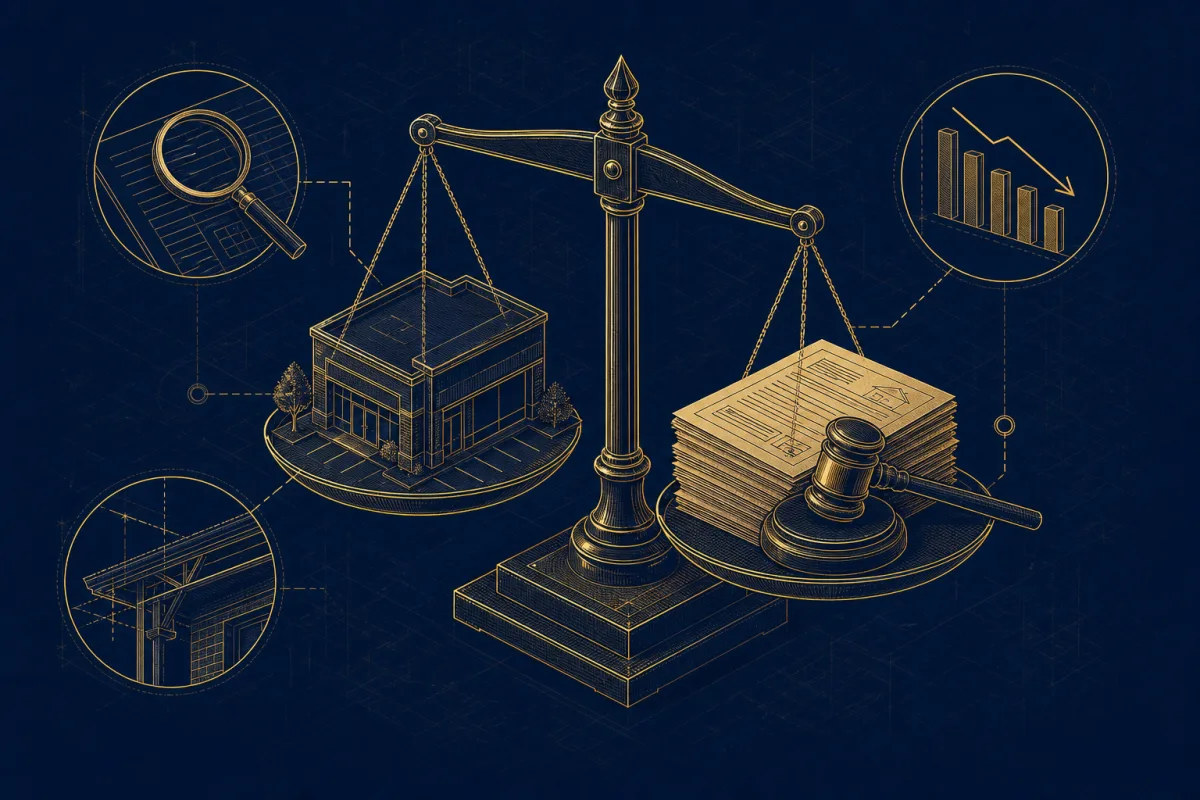
Visual planning lane
Owners and advisors should be able to see why this lane matters, what facts drive the answer, and how the final output travels back into the CPA or advisor conversation.
Evidence model
Appeal and valuation work becomes stronger when income, condition, market, and filing calendars are organized early. For Property Condition Assessment, the practical window is due diligence, refinance, and capital planning and the expected output is condition assessment and repair-priority summary.
Notice
Assessment, appraisal, reserve, insurance, or transaction facts identify what value question matters.
Evidence
Income, condition, market, repairs, and comparable data become reviewable evidence.
Position
The owner sees whether the appeal or valuation path is supportable before the deadline controls the answer.
Action
The file is packaged for appeal counsel, CPA, lender, insurance, or ownership review.
Best when assessment notices, operating data, condition records, and appeal dates are still actionable.
Condition and risk
Property condition assessment connects HVAC, roofing, parking, deferred maintenance, and other building-system findings to capital exposure, reserve needs, property tax evidence, insurance support, transaction risk, and future planning. JPOPE helps owners turn property facts into a practical repair-priority and advisor conversation.
What Jamie checks
Use this lane when assessments, property condition, valuation, insurance, or reserves need evidence-backed support before owners overpay or under-plan.
Taxpayer context
Owners, buyers, asset managers
Who owns, advises, or acts on the planning answer.
Record support
Source file and documents
The first records that support the position.
Timing window
Due diligence, refinance, and capital planning
When the facts still leave room for a better answer.
Advisor output
CPA-ready output
The format needed for CPA, owner, or advisor review.
Review signal
Building systems, deferred maintenance, immediate repairs, and long-term capital needs.
Review signal
Due diligence, refinance, reserve, valuation, and acquisition decision context.
Review signal
Owner-facing priorities that distinguish urgent issues from planning items.
Review signal
HVAC, roof, pavement, envelope, electrical, plumbing, and life-safety findings that affect capital exposure.
Review signal
Repair-priority notes that connect condition findings to pricing, lender, reserve, or tax conversations.
Review signal
Advisor handoff that separates immediate defects from longer-term budget, insurance, appeal, reserve, and ownership planning.
Owner questions
Ready to test the fit?
A complete file is not required. Start with the property decision, the date controlling it, and the records already available.
Direct answers
Use these answers to decide whether the timing, records, and advisory handoff point to a deeper planning conversation.
Review Property Condition Assessment during due diligence, refinance, and capital planning. An assessment notice, financing event, due diligence window, or appeal deadline is active.
Start with Building systems, deferred maintenance, immediate repairs, and long-term capital needs; Due diligence, refinance, reserve, valuation, and acquisition decision context. JPOPE uses those facts to decide whether the position is documented, time-sensitive, and ready for CPA review.
The usual output is condition assessment and repair-priority summary, packaged so ownership and the advisory team can understand the tax value, supporting evidence, and next action.
Defined advisor role: JPOPE organizes the CRE-specific facts, analysis, and support file. The owner's CPA, attorney, engineer, appraiser, or other responsible professional remains in the review and implementation path when their judgment is required.
Video follow-through
Use the video to frame what records, timing, and output should be ready before deeper analysis starts.
Service signal
The condition assessment video looks beyond surface inspections to HVAC, roofing, parking, repair exposure, insurance, and future budgets.
Deadline pressure
80%
Assessment, due diligence, insurance, or reserve timelines shape the work.
Evidence weight
89%
The property story needs support beyond a simple spreadsheet.
Decision utility
84%
Findings should help the next appeal, budget, negotiation, or filing position.
What you will learn
A property condition assessment is not a home inspection — and confusing the two is expensive. A home inspection flags problems for a price negotiation. A PCA is an engineering baseline — an ASTM standard walk through every major system: roof, structure, mechanical, electrical, plumbing, pavement. What shape it's in, and how much life is left in it. The tax power is downstream. That system-by-system inventory is exactly what a cost segregation study componentizes — and what separates a repair you deduct now from an improvement you depreciate for decades. So one document does three jobs: it feeds the depreciation study, it backs the repair-versus-capital call with engineering facts, and it sizes the reserve fund. Read before closing, it's negotiating power. Read after, it's just a repair bill. Before you buy or budget, get the engineering baseline. JPOPE Tax Consultancy. Schedule your consultation today.
© 2026 JPOPE Tax Consultancy. Screening estimate — not tax advice.
How the work moves
The sequence keeps the owner question, technical review, and CPA handoff connected so the page reads as a path rather than separate service claims.
Step 1
Clarify the property, ownership, transaction, and timing facts behind the tax value.
Step 2
Review records for deductions, credits, valuation issues, basis, and planning impact.
Step 3
Develop condition assessment and repair-priority summary with the context needed by the CPA and advisor team.
Step 4
Help the next conversation move cleanly with the CPA, advisor, broker, or ownership team.
Related resources

A working list of valuation, assessment, income, and condition documents to prepare before appeal deadlines tighten.
View resource
A multi-lane case study showing how property condition, valuation, cost recovery, property tax, and insurance review can reinforce each other.
View resource
A property tax appeal case study on separating real estate value from business performance, tenant strength, and temporary operating disruption.
View resourceStart with fit
A short fit review can confirm whether this service area is the right starting point or whether another planning lane should come first.